Thursday, January 21, 2016

Winter Book Review: The Gospel in Tolstoy

The Gospel in Tolstoy: Selections From His Short Stories, Spiritual Writings, and Novels

With all my soul I longed to be good, but I was young, I had passions, and I was alone, utterly alone, whenever I sought what was good.

So writes legendary author Leo Tolstoy in "My Way to Faith," one of many entries in one of the newest anthologies to be released of the Russian writer's copious volumes of fiction and nonfiction alike: "The Gospel in Tolstoy" (Plough Publishing, 2015), which is currently ten bucks in e-book format, and roughly the same price used.

I had had a passing familiarity with Tolstoy from my time in seminary, when I had to read his The Death of Ivan Ilyich for a class on cultural attitudes towards death that I was taking at UC-Berkeley, but it wasn't until years later, when I was already in the field pastoring, that I began to understand the impact that Tolstoy has had on a number of my friends, both religious and nonreligious, who spoke of being influenced by Tolstoy, including a colleague and friend who spoke of Tolstoy's impact on him, even as a nonbeliever, in a podcast we recorded together on how people talk about religion today.

I firmly believe that a good book review does not just summarize the book's contents for you--and the reviewer's impression of them--but that it also tries to place for you the book within the wider context of literature and life.  Anthologies as a genre inherently must make great use of the tools of editing when one is dealing with standalone works, and so an aware reader can glean a great deal of insight about an anthology's purpose based on what is included and where.  To that end, it is important to note that it would be quite easy to compile an anthology of Tolstoy without touching on his overtly religious work, to stick more to excerpts from his famous novels instead.

As you can guess by the title "The Gospel in Tolstoy," as well as by the excerpted quote that begins this review, this is an angle that has not been taken here in favor of plumbing Tolstoy's writings for the many theological themes that inform them--themes of death and resurrection as well as of pacifism, nonviolence, and other progressive ideals he embodied from the influence that Jesus Christ had upon him.

In this, the anthology very much serves its purpose.  It feels a bit disjointed at the outset, as its introductory section entitled "Finding God" really could serve as the theme for the entire anthology rather than just a section of it, and quite a few separate themes of journey, death, and renewal all take place within its confines, but once you settle in, the selections peel off in an accessible, readable manner that can keep an interested reader engaged for hours.

Perhaps most importantly, though, the selections which made the cut do justice to the vivid prose of a man whose faith was informed by this profound depth of passion as well as solitary loneliness that comes through in Tolstoy's reminiscence of his youth.  This is an author who has mastered the need and art of introspection, and that he was able to extract the resulting fruit from those many years of introspection and formulate it into a body of writing that appeals to this day is a testament to the voice he gives to the inner questions and existential angsts that we all at times may feel.  If you seek a companion for your own introspective paths into the soul, you may find a knowing guide in Leo Tolstoy.

Disclaimer: My copy of The Gospel in Tolstoy came at no charge from the publisher; however, all opinions here are entirely my own.

Image of Leo Tolstoy courtesy of Wikipedia

Sunday, January 17, 2016

This Week's Sermon: "Love is the Fundamental Revolution"

Matthew 22:34-40

When the Pharisees heard that Jesus had left the Sadducees speechless, they met together. 35 One of them, a legal expert, tested him. 36 “Teacher, what is the greatest commandment in the Law?” 37 He replied, “You must love the Lord your God with all your heart, with all your being, and with all your mind. 38 This is the first and greatest commandment. 39 And the second is like it: You must love your neighbor as you love yourself. 40 All the Law and the Prophets depend on these two commands.”


“A Mount Rushmore of My Soul: Who Influences Your Faith?” Week Two

Two months ago to the day, the story appeared in American media, after having lit the airwaves in a France that was absolutely reeling in shock over the ISIS terrorist attacks in Paris that killed hundreds of people.  As the City of Light strove to continue flickering, journalists from the world over flocked to Paris to interview just about anyone they could find…including a young boy, who was with his father at one of the many memorials that had sprung up in the wake of the attacks.

The journalist decides to interview the boy—because, why not, apparently, it's not like grown adults have struggled with the question of why Paris happened—and the boy, who could not have been more than five or six, understandably tries to articulate the deep-seated insecurity and fear that comes with being a child and worrying about massive consequences for things entirely out of your tiny little hands.

So the father interjects to allay his son’s fears, and…well, here is the whole transcript:

Journalist: Do you understand what’s happened?  Do you understand why these people have done this?
Boy: Yes, because they are very, very, very bad.  Bad people aren’t very nice.  And you have to be very careful because you need to move house.
Father: No, don’t worry, we don’t have to move.  France is our home.
Boy: But what about the baddies, Dad?
Father: There are baddies everywhere.  There are bad guys everywhere.
Boy: They’ve got guns.  They can shoot us because they’re very, very bad, Daddy.
Father: They’ve got guns but we have flowers.
Boy: But flowers don’t do anything.  They’re for…they’re for…they’re for…
Father: Look, everyone is laying flowers here.
Boy: Yes.
Father: It’s to fight against the guns.
Boy: Is it for protection?
Father: That’s right.
Boy: And the candles too?
Father: They’re so we don’t forget the people who have gone.
Boy: Oh.  The flowers and candles are there to protect us?
Father: Yes.
Journalist: Do you feel better now?
Boy: Yes, I feel better.

Believe it or not, the father’s name is Angel—Angel Le.  And of course that is what his name would be; for someone heralding, proclaiming, and championing love as a form of protection, as a fundamental safeguard against evil, that is an angel’s job.  And as Christians, it is our job as well.

This is a new sermon series for a new year, although the genesis of this series came in the middle of 2015, when I posted on Facebook to ask folks what the Mount Rushmore of their faith would be—which four writers, pastors, theologians, etc. are the ones who have shaped their faith the most?

Once my (genuinely beloved) atheist friends had had their fun, I got an amazing array of responses to that question, with some names that were repeated several times: C.S. Lewis, Paul Tillich, Hildegard of Bingen, and Martin Luther King, Jr., all of whom would have made a great reserve squad if, you know, Mount Rushmore had a bench (I suspect that would have added a number of years to its construction).  But when I limited myself to four, the four that I eventually settled upon were St. Teresa of Avila, Soren Kierkegaard, Dietrich Bonhoeffer, and Nelson Mandela.

This sermon series, then, will take each of them and offer one sermon each on how they revealed God’s presence, truth, and love to a broken world in sore need of the message they had to offer, beginning last week with St. Teresa of Avila and continuing today with Soren Kierkegaard.  By the time we finish talk about all four of them, we will be ready to enter February and the church season of Lent, which is amazing to think since we just finished celebrating Christmas!

When you think of the saccharine sweetness of Christmas, though, with the egg nog and gingerbread and candy canes, Soren Kierkegaard would have none of it.  If Oscar the Grouch were a theologian, he’d be Soren Kierkegaard, a 19th-century Danish theologian and philosopher, widely credited with the invention of existentialism, who famously said that because we enter the world crying and leave it groaning, life could not possibly be meant to be enjoyed.  Except that even Kierkegaard’s perpetual grumpiness cannot throw shade upon his absolute faith in God’s love, as he writes:

Love is a change, the most remarkable of all.  Love is a revolution, the most profound of all but the most blessed!  With love, too, there comes confusion.  But in this life-giving confusion there is no distinction between mine and yours.  Remarkable!  There are a “you” and an “I” and yet no “mine” and “yours!”  For without you and I there is no love, and with mine and yours there is no love.  This is why love is the fundamental revolution.  The deeper the revolution, the most the distinction between mine and yours disappears, and the more perfect is the love.

Love is the fundamental revolution, Kierkegaard says, and he so says because his Messiah, and ours, so said all the way back in Roman-occupied Israel.  And Jesus says this in response to something quite unloving: the continued testing of Him and His authority by His opponents within the Jewish temple leadership: the Pharisees, Sadducees, scribes, and other teachers of the law.

They ask Jesus what the most important of the laws are—and keep in mind, there are 613 such laws in the Hebrew Bible.  The idea is, how can Jesus pick just one?  If He does, His opponents can say, “Well, what about this law or that law, how can it not be as important?”  It was a way for His opponents who were increasingly desperate to discredit Him to finally be able to do so.

But Jesus doesn’t accept the premise of their question.  He says there is not one most important law, but two: to love the Lord your God with all your heart, all your soul, and all your mind (Deuteronomy 6:5), and to love your neighbor as yourself (Leviticus 19:18).

But then Jesus completely erases the premise of the question posed to Him.  He says, “All of the Law and the Prophets (basically, the entire Hebrew Bible) depend on these two commands.”

Nothing like that had been taught by the temple teachers before.  At all.  The Sadducees didn’t even take anything beyond the first five books of the Hebrew Bible (the Torah) as Scripture, in no small part because the prophets like Isaiah and Jeremiah were constantly taking the people in power to task for not looking out for the interests of the people they led—essentially, what the Sadducees themselves were guilty of—and the Pharisees were likewise interested more in keeping their hands on the levers of power rather than serving the interests of Israel.  Neither represented their people.

So in one sentence, Jesus completely revolutionized the way we are meant to interpret and live out that same Hebrew Bible.  Basically, if we are not both loving God and loving other people, it does not matter whether we are adhering to the other 611 laws in the Old Testament, because those 611 laws are rendered moot by our inability to follow the other two, the most important and fundamental of the two.  In this way, Jesus does for us what Kierkegaard would later proclaim: Jesus made love a fundamental revolution for humanity.

That revolution, though, is something we have to experience, must experience for ourselves before we can pass it along to others, to our children, as this one father in Paris, Angel, did for his little boy after the terrorist attacks there.  It is not enough to simply read it in a book or to hear it said on Sunday mornings.  It must be lived, and lived thoroughly.

This is what mattered for someone like Kierkegaard, and, I think, why it matters for someone like me as well: faith is something that must be lived.  That’s a simple notion, but such a profoundly important one.  Faith must be experienced.  It cannot simply be said, or taught, or worse, taught disingenuously.  It must be, has to be, lived out.

When it is lived out, Kierkegaard says, there will indeed be confusion.  And I imagine there well was for some who saw this clip of Angel comforting his son.  What on earth is a candle and its light good for against terrorists arrayed with firearms and explosives?  How could flowers possibly help us in a circumstance such as this?

But they help because they remind us that there is no revolution greater, no revolution more fundamental, no revolution more divine in either mandate or origin, than the revolution of love.

That is why Jesus had to answer His opponents the way He did on that day in Jerusalem, so close to the ultimate expression of His love for us: His crucifixion and resurrection.

And because of that resurrection, millions, billions more would hear and then live the story.  They would live that revolution of love for themselves.  People like the others in this series—like Teresa of Avila, Dietrich Bonhoeffer, and Nelson Mandela.  People like Martin Luther King, Jr., whose day tomorrow honors not just him but the fundamental equality he stood for, strove for, and longed for.

People, I pray, like each of us as well.  May we be so blessed, so incredibly, inexplicably, and undeservedly fortunate, to join them in their life’s work of making this creation a more lovely, and loving, place.

May it be so.  Amen.

Rev. Eric Atcheson
Longview, Washington
January 17, 2016

Thursday, January 14, 2016

In Threes

Earlier this week, it was David Bowie.

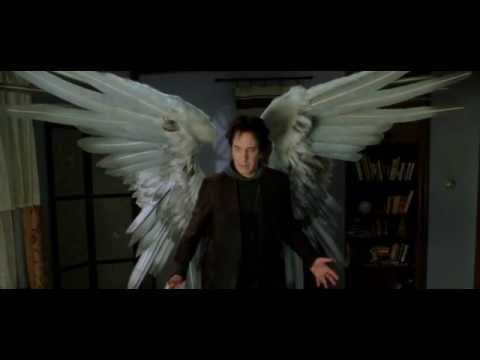
Today, it's Alan Rickman.

Both died this week at age 69, both from cancer.

If the saying really is true that such deaths come in threes, I dread that third shoe dropping.

As much as Bowie had an impact on me because of his iconic status to the outcast and the oddballs, Rickman's actual work had a genuine impact upon my faith in God, an impact that has lasted to this day.

I say this realizing that many, perhaps most, of you will most remember Rickman as Professor Severus Snap in the Harry Potter universe, or as terrorist mastermind Hans Gruber in the Die Hard series.  There may even be one or two of you out there who are like, "You know what?  Alan Rickman in Love Actually really taught me it was okay to love again."  And I will respect you for that, even as I stifle my chortling.

For me, Alan Rickman was, and will forever be, the Metatron, the herald of the Almighty and voice of the one true God, in Kevin Smith's movie Dogma.

Dogma--as you can imagine because, well, it's Kevin Smith--was patently and gleefully irreverent in its reverence and thoughtfulness, enlisting outspoken atheist George Carlin to play a schlocky Roman Catholic cardinal and deputizing another oddball musician--Alanis Morissette--to play God.  The film received quite a bit of criticism from a number of Christians over its irreverence, profanity, and, well, Kevin Smith-iness (never mind that Smith himself was and is a practicing Catholic).

But Dogma's message, that even the most hardened and cynical of believers can still seek the truth and can count on finding devoted (if demented) help along the way, was something my teenaged self desperately needed to hear as an alienated and bullied progressive Christian in the whitebread, cookie-cutter world of suburban Kansas from whence I came.

I felt alienated from God because I felt alienated from the world God had made for me.

But it was Alan Rickman, as the Metatron, that was, with one line in the film, able to say to me (and Linda Fiorentino, but I'm convinced mostly me) that God simply does not give up on God's children: "Noah was a drunk, and look what he accomplished.  And nobody's even asking you to build an ark!"

Nobody asked me to build an ark.  Just the church.

Still big, still soul-sized, but at least the latter is something I can handle doing.

I can truthfully say that I have experienced God's presence directly and profoundly in my life--when I had to preach at age 18 the morning after a childhood friend had died in an automobile wreck the night of my senior prom, when I stood in a room in a hospital's ICU with a family and watched their father sit up and open his eyes--but I am not sure if I have heard God's voice, or the Metatron's voice speaking in my ear like Moses at the burning bush.

Were I to do so, however, I continue to hope that this voice that would speak to me, call me, commission me...would be rather like the voice of Alan Rickman, telling me that no matter my faults, no matter my flaws, my nickel and dime sins, that I am still capable of accomplishing something great and good on behalf of the God for whom he speaks, and for whom I love.

It is a hope I have.

Enjoy your new wings, Alan Rickman.  I hope God is everything you have said God would be.

And if this is the second of three, I must say, I rather dread the third.

Vancouver, Washington
January 14, 2016

Image of Alan Rickman as the Metatron courtesy of Youtube

Monday, January 11, 2016

Peace on Earth (Can it Be)

I couldn't sleep last night.  It had been a jam-packed day at church, with 17 kids for storytime, the first meeting of our new men's small group, and the kicking off of my fist new sermon series for the year, that even after hitting the gym, cooking and having dinner with C, and pouring myself a scotch to enjoy as I caught up on all of the FA Cup games from England, I was still amped up well after midnight.

So I opened my laptop to play a couple games of FIFA, but before I plugged in my controller, I did what millennials do between tasks and idly clicked over to Facebook.  It was then that I began to see the headlines of the stories on my news feed:

David Bowie dead at 69

Musician David Bowie has died

Legendary musician David Bowie dies at age 69

I froze.  Bowie was born in 1947, but he belonged to more than just the generations of the baby boomers and the Xers.  He belonged to us as well.  His performance as Jareth in Labyrinth, his vocals with Freddie Mercury in Under Pressure...heck, the fact that BlackStar, his final opus, had dropped just two days prior on his birthday meant that Bowie was far more than a flash in the pan, far more than a niche, far more than just another oddball musician.

In point of fact, it was his oddity that appealed.  I nearly cried as I read collections of memories of GLBTQ people for whom David Bowie was the first person to give them permission to be who they are, as God made them to be, and not as how a brutally demanding society bent on homogeneity demanded that they be.

Bowie belonged to the outcasts, to the misunderstood, to the people who never quite colored in between the lines, because he indeed never did so himself.

The funny thing is that he, too, was accepted.  Even in an era--back in the 1970s--when being openly gay or bisexual was still largely verboten.  He was accepted, and not just in spite of his weirdness, but because of it.

When I could finally move again after seeing the news, I clicked over to Youtube and typed "David Bowie, Peace on Earth" into the search engine to bring up this:


Back in 1977, only a year or two removed from Bowie coming out as bisexual, Bing Crosby had him on for his (Crosby's) annual Christmas special, which they filmed in September.  Crosby was *the* establishment: he was a registered Republican, a huge name in not just music but television and film as well, and an entrepreneurial businessman.

But Crosby had the gender-bending, bizarre, impossible-to-label Bowie on his show in September of 1977 to film the duet above in which Crosby sings, in its traditional rhythm, the Carol of the Drum (Little Drummer Boy) as Bowie sings, in his higher tenor, Peace on Earth (Can it Be) as a countermelody:

Peace on earth, can it be
Years from now, perhaps we'll see
See the day of glory
See the day when men of goodwill
Live in peace, live in peace again
Peace on earth, can it be

I pray my wish will come true
For my child, and your child too
They'll see the day of glory
See the day when men of goodwill
Live in peace, live in peace again

Peace on earth, can it be

I played the video.  And then I played it again.  Never mind that Christmas has come and gone.  I got to hear this voice that would not sing again, at least, not on this earth.  Not in this life.

Nearly 40 years removed from this recording, we are still striving for that day of glory that Bowie spoke of.  Crosby would not be around for any of it, though--before the segment even aired for Christmas, Crosby died that year of a sudden and massive heart attack.  Much like Bowie's own death--because it had been kept private by him and his family--Crosby's demise came as a genuine shock when it happened.

That year, 1977, was his last-ever television special.

And he used it to bring in David Bowie.

David Bowie belonged to all of us, not in spite of his uniqueness but because of it.

And for that, the people whose lives he touched are forever in his debt.

Thank you, David Bowie.  Go with God.

Vancouver, Washington
January 11, 2016

Image of David Bowie as Jareth courtesy of Pinterest

Sunday, January 10, 2016

This Week's Sermon: "Christ Has No Hands But Yours"

Mark 8:22-25

22 Jesus and his disciples came to Bethsaida. Some people brought a blind man to Jesus and begged him to touch and heal him. 23 Taking the blind man’s hand, Jesus led him out of the village. After spitting on his eyes and laying his hands on the man, he asked him, “Do you see anything?” 24 The man looked up and said, “I see people. They look like trees, only they are walking around.” 25 Then Jesus placed his hands on the man’s eyes again. He looked with his eyes wide open, his sight was restored, and he could see everything clearly. (Common English Bible)


“A Mount Rushmore of the Soul: Who Influences Your Faith?” Week One

The scene is a somber one, one that you have likely seen before: a casket, draped in an American flag, is being moved in and out of the trunk of a hearse by six impeccably-clad pallbearers in formal dress and white gloves.  We’ve all seen this portrait before, of a veteran or a soldier being given their final farewell from this earth.

But as your gaze climbs upward from the casket itself, you would see that these pallbearers, while crisply attired and formal to a fault, are teenagers.  High school students from a Jesuit school in Detroit, whose office arranges with a nearby funeral home these sets of youthful honor guards for homeless veterans throughout the city.

Even for a fully-grown person, attempting to maneuver a wooden casket carrying a body is no small task, even with the aid of a cart.  Add in the stiffness of a suit and starched shirt, the heat of the summer sun, and the white gloves, and it isn’t something you would particularly relish doing.

But these boys do, because of what it means to both them and to the other witnesses.  The funeral director puts itrightly: “Their service to the less fortunate honors the dignity of individuals who are mostly out of the view of our society.”

Being out of view comes from a variety of causes—sometimes we want to remain out of sight.  But many times we do not, and the blindness is a willful one, as is so often the case when it comes to the most marginalized people in our world: homeless veterans, refugees, the actively addicted, and more.

And that causes us great difficulties when it comes to actually then healing the world, as the church is meant to do, because when we ourselves are blind, giving sight to another is no easy feat.  And even when our vision might be restored, it sometimes only comes back just a little bit, as this man’s vision did in Mark 8, before Jesus fully heals him—and, in so doing, potentially fully heals us as well.

This is a new sermon series for a new year, although the genesis of this series came in the middle of 2015, when I posted on Facebook to ask folks what the Mount Rushmore of their faith would be—which four writers, pastors, theologians, etc. are the ones who have shaped their faith the most?

Once my (genuinely beloved) atheist friends had had their fun, I got an amazing array of responses to that question, with some names that were repeated several times: C.S. Lewis, Paul Tillich, Hildegard of Bingen, and Martin Luther King, Jr., all of whom would have made a great reserve squad if, you know, Mount Rushmore had a bench (I suspect that would have added a number of years to its construction).  But when I limited myself to four, the four that I eventually settled upon were St. Teresa of Avila, Soren Kierkegaard, Dietrich Bonhoeffer, and Nelson Mandela.

This sermon series, then, will take each of them and offer one sermon each on how they revealed God’s presence, truth, and love to a broken world in sore need of the message they had to offer, beginning today with St. Teresa of Avila.  By the time we finish talk about all four of them, we will be ready to enter February and the church season of Lent, which is amazing to think since we just finished celebrating Christmas!

St. Teresa of Avila was a 16th century Carmelite nun, theologian, and mystic who claimed visions of both Jesus and Mary, and who wrote prolifically on her meditation and prayer life, writing firstly:

Let nothing disturb you
Let nothing make you afraid
All things are passing
God alone never changes
Patience gains all things
If you have God you will want for nothing
God alone suffices

And even more famous is this passage, which is widely attributed to St. Teresa:

Christ has no body now on earth but yours
No hands, no feet on earth but yours
Yours are the eyes through which the compassion
Of Christ is to look out on a hurting world
Yours are the feet with which He is to go about doing good
Yours are the hands with which He is to bless now

It is, fundamentally, a theology of incarnation.  The body of Christ no longer exists in the earthly form of a dirt poor, homeless, traveling carpenter, no—the body of Christ is *your* body.  It is *my* body.  It is *our* body, as a church.  And it is precisely because of that reality that St. Teresa’s first passage makes sense—nothing should disturb us, nothing should make us afraid, because God alone never changes, and God’s hands are our hands.  God’s eyes are our eyes.  God’s feet, our feet.

It is perhaps difficult, even disturbing for us to countenance that ours might actually be the hands and feet of Christ.  After all, we may well be like Peter, who upon being introduced to Jesus in Luke, shouted out, “Away from me, for I am a sinner!”  And we might well echo that cry in our own view of ourselves: I am a humble, broken sinner, what on earth could this Jesus possibly want with me?

More than we could possibly imagine is the answer.

Jesus sees this blind man on the way to Bethsaida, and Jesus heals him not once, but twice—the first laying on of hands only restores the man’s vision partway, so that he can fuzzily see shapes, but the shapes aren’t correct—to him, people look like moving trees!  While comical, it’s something I get—without my own eyeglasses, people don’t look like people to me, they look like blurry blobs of flesh-colored Flubber…albeit usually not quite so energetic or frenetic.

Quite simply, he lacks the 20/20 vision that we take as standard.  So Jesus lays hands on him a second time, and his vision becomes clear as day.

Sometimes, the first encounter with God isn’t enough—sometimes, God has to reach out to us a second time to fully take effect the change that God wants in us.

And there is nothing wrong with that.  There really, truly isn’t.  The key is, to make sure that we have the patience to try again and again and again in reaching out to and serving others in return.

Because sometimes, it takes more than one attempt.  And other times, we know that deep down, there will always be another situation in which our reaching out will be called for.

Like the Jesuit high school students in Detroit in their mission as pallbearers for the shelterless soldiers among us.  Until we get our act together and support the reintegration of soldiers into civilian life, there will continue to be legions of homeless veterans among us, crying out for help like the friends of the blind man, and dying sooner than they should.

In truth, that is an example of how our vision requires a second healing from Jesus, a second laying on of hands, if ours are truly to be the eyes and hands of Christ in a hurting world.

We look at these children carrying these grown men and women into the ground, and we would be forgiven for seeing them as mature adults—because our vision is still blurred.

We look at people around the country, around the world, and we do not see them as having the same worth as us—because our vision is still blurred.

But then divine hands are laid upon us, and our vision is cleared.

Only now, today, those hands are not the hands of the bodily Jesus of 2,000 years ago, they are the hands of a loved one, of a friend, of a neighbor, reaching out to steady a shoulder, wrap an arm around the back, or to simply lift up a chin.

Far too often, those hands are used for far less loving, and far more violent things.  I know it.  You know it.  Domestic violence, beatings, assault…it is a cruel, bitter thing to realize that something that can and should be used as a tool to heal is instead used as a weapon of war.

Which is all the more reason, then, to reclaim the hands of Christ.  To reclaim the eyes of Christ.  To reclaim the voice of Christ.

Christ has now no body on earth but yours.

What a great, terrible, wonderful, painful, awe-inspiring responsibility.

May we prove to be just the tiniest bit worthy of this great thing to which we have been called by the One who created us.

Thanks be to God.  Amen.

Rev. Eric Atcheson
Longview, Washington
January 10, 2015

Wednesday, January 6, 2016

On Hijabs and Heresies: The Shameful Sacking of Larycia Hawkins

When I was a teenager, I told my youth Sunday School teachers that I had been studying about Mahayana and Tibetan Buddhism because I was finding many of its teachings about interpersonal relationships, violence, and enlightenment.

Keep in mind--I was born and raised in Kansas.  The same Kansas that gave the world Fred Phelps's "God Hates F*gs" Westboro Baptist Church.  The same Kansas that tends not to want to teach its public schoolchildren science--when it is able to keep the schools open at all.

I am certain that in other churches in my hometown, my fleeting interest in Buddhism would have been cause for hauling me in for a stern "come to Jesus" talk with the pastor, replete with pointed demands to knock it off, or else.

In my church, though, my Sunday School teachers asked me to take part of a future class to share with my fellow youth about how my study of Buddhism had affected my practice of Christianity.

And if they had reacted as another church may have done, to scold me for my intellectual pursuits, I am not sure I ever would have become an ordained pastor today.  In order to produce the most fully realized versions of people, you have to allow them their intellectual quests, their theological wonderings, and their exercising of their ability to wrestle, as Jacob did at Penuel in Genesis 32, with God.

Which brings me to Wheaton College's professor Larycia Hawkins.  Or, rather, soon to be ex-professor (although I imagine many other Christian schools would rightly jump at the chance to invite her to join their faculty), because Wheaton is reportedly on the brink of firing her for saying that Christians and Muslims worship the same God.

(In her photo above, she is likewise wearing hijab in solidarity with the Muslims who have faced renewed prejudice and bigotry in the wake of the Paris and San Bernadino attacks--prejudice and bigotry, by the by, that I as a Christian have not faced in the wake of the violent actions by Robert Lewis Dear and the Bundy Militia in Colorado and Oregon, respectively.)

We'll set aside, for the moment, the Muslim interpretation that in fact it is the same God, and the Muslim tradition that includes Jesus as a prophet in the same line of prophets as Muhammad.  We'll also set aside, for a moment, the traditional Judeo-Christian teaching that Islam, like Judaism and Christianity, is in fact an Abrahamic faith, descended all the way from Abraham's two sons--from Isaac came the Hebrews, and from Ishmael came the Arabs from whom Islam eventually originated.

We'll also set aside, for the moment, that it is no actual affront to Christianity to say that the God of the Bible and the God of the Qur'an may in fact be the same God.  The Qur'an contains a number of amazing stories about Jesus, including miracle stories, that to us as Christians speak to Jesus's divinity.

And finally, we'll set aside the fact that as much hay as we make about political correctness potentially infringing upon academic freedom, here we have a Christian school doing what many Christian schools have always done--deny any sort of meaningful academic freedom to its faculty, and stunting academic inquiry as a result...

At what point did we decide that we valued doctrine more highly than people?

I wrote those exact words last March in response to another seminary's president publishing a hatchet job of Disciples preaching legend Fred Craddock on the day of his funeral, and the sentiments that followed remain as true today as they did then:

This is a worrying trend I have seen in Christianity, where we seem to value doctrinal and theological purity more than the people, even though, in the end, we are called to minster to our people and not to our statements of belief.  And if a seminary president is engaging so gratuitously in placing belief above respect of others and right relationship with others, I fear that this malaise now runs deep within our collective bones.

My senior pastor in California, Russ, was always telling me that youth ministry is 90 percent relational; I'd go even further and say that all of ministry is 90 percent relational.  I may possess all the truth that is worth knowing in this world, but if I cannot communicate it with love to other people, such possession of truth is meaningless.

Or, to put it another way, from a theologian much smarter than I, "If I speak in tongues of human beings or of angels but I don't have love, I'm a clanging gong or a clashing cymbal."

That would be from Paul, in the beginning of his famous "love is patient, love is kind" discourse in 1 Corinthians 13.  And despite what that passage's presence in so, so many weddings would tell you, Paul is not talking about romantic or marital love (in fact, he rather detests that sort of love, but that's another can of tuna).  The Greek word he uses here is caritas, from which we get our English word "charity."

If I am not charitable towards others, if I lack charity, I am nothing.

And charity isn't just the giving of a dollar to the person on the street corner, it is a generosity of spirit.

Even if you were to take the series of times Professor Hawkins has been called in by the doctrine police at Wheaton as an indication that this particular episode represents the straw breaking the camel's back, whatever happened to Christ's own pronouncement on forgiveness?  How often must I forgive my neighbor, Jesus, as many as seven times?

No, seventy times seven, said Christ.

This is why requiring affirming statements of faith can be such a poisonous practice by Christian colleges, and why my own denomination's founders explicitly forbade the practice of demanding creeds and statements of belief from their adherents.  These statements are far more easily used as instruments to divide and destroy rather than as tools to heal and build up.

And when we do the former rather than the latter--as is our wont--we are proving ourselves once more to be more caring and protective of doctrine than of the people who hear it and follow it.

Never mind the fact that without people to be in relation with, there is no point in having doctrine to teach and proclaim to begin with, because you are teaching and proclaiming it to nobody.

Never mind the fact that doctrine itself, all doctrine, is distilled down by Christ Himself into two commandments: love God, love your neighbor.

And never mind that having right doctrine is probably utterly pointless in the end anyways; if I get to the gates of Heaven and Saint Peter hands me a list of yes/no questions about my doctrine, a scantron sheet, and a #2 pencil, I'll eat my proverbial hat.

Because everything I know about God tells me that God desires reconciliation with us first and foremost.

However and wherever it takes place, I am sure that such reconciliation is a part of God's design.

Which is why it grieves me so to see Wheaton College sacrifice it upon the altar of doctrinal purity in casting out a professor of the depth, caring, and talent that Larycia Hawkins offers to the world.

Vancouver, Washington
January 6, 2015

Image of Professor Hawkins courtesy of the Washington Post and the Associated Press

Sunday, January 3, 2016

This Week's Sermon: "By Another Road"

Matthew 2:1-12

After Jesus was born in Bethlehem in the territory of Judea during the rule of King Herod, magi came from the east to Jerusalem. 2 They asked, “Where is the newborn king of the Jews? We’ve seen his star in the east, and we’ve come to honor him.” 3 When King Herod heard this, he was troubled, and everyone in Jerusalem was troubled with him. 4 He gathered all the chief priests and the legal experts and asked them where the Christ was to be born. 5 They said, “In Bethlehem of Judea, for this is what the prophet wrote: 6 You, Bethlehem, land of Judah, by no means are you least among the rulers of Judah, because from you will come one who governs, who will shepherd my people Israel."


7 Then Herod secretly called for the magi and found out from them the time when the star had first appeared. 8 He sent them to Bethlehem, saying, “Go and search carefully for the child. When you’ve found him, report to me so that I too may go and honor him.” 9 When they heard the king, they went; and look, the star they had seen in the east went ahead of them until it stood over the place where the child was. 10 When they saw the star, they were filled with joy. 11 They entered the house and saw the child with Mary his mother. Falling to their knees, they honored him. Then they opened their treasure chests and presented him with gifts of gold, frankincense, and myrrh. 12 Because they were warned in a dream not to return to Herod, they went back to their own country by another route. (Common English Bible)


Epiphany Sunday 2016

How much would you pay for free first-class travel, whenever you wanted, to anywhere American Airlines flies, for life?  And how much do you think such an unlimited pass would cost an airline?

The last year American offered such a promotional pass, the AAirpass, in 2004 as a one-time revival after it was first retired a decade earlier, the price tag was $3 million, and $2 million for a plus-one.

Steve Rothstein, a fellow now in his mid-sixties, purchased an AAirpass for himself, along with a companion pass for when he wanted to travel with his wife or another family member, back in 1987 for a total of $400,000 for both passes.  In 2015 dollars, that pair of passes set him back $835,690.

And in the twenty-one years between 1987 and 2008, Steve racked up travel worth $21 million, going by the sticker price of a first-class ticket for each of the 10,000 flights he has taken.

Steve didn’t rack up that huge tab by himself, though—he has given away all of his 14 million frequent flyer miles, and he would frequently use his companion pass to help strangers in need (because we all know how difficult flying can be with emergencies, cancellations, and all manner of crises) to get them where they need to go, no strings attached.  One woman he was able to get home back to her kids after their nanny had flaked, he got a priest to Rome to see the pope, and others he would simply surprise with an upgrade if they had had a bad day.  Another chap with an AAirpass, Jacques Vroom, would likewise donate his miles and companion seats to HIV/AIDS patients trying to fly home to see their families again—in first-class luxury.

It was one such do-gooder derring-do—an attempt by him to get a police officer all the way to Bosnia, where the officer had been born and raised—that ultimately landed him in hot water with the suits at American.  They claimed he had perpetrated fraud by booking his companion pass under a variety of fake names because he wouldn’t always know when or if he would need to use it to get a total stranger home to see their loved ones, and cancelling the seat if he didn’t need to give it away.

Imagine the desperation and urgency with which you do see some people traveling by air sometimes—someone in their lives has just died, or is about to die, or is at risk of dying, as is the case for the newborn Christ when the magi (believe it or not, Matthew doesn’t say whether there were only three or not, we simply assume that there were only three because of their three gifts) show up, with a murderous Herod the Great bent on wiping out this new threat to his kingship.

King Herod, summons the magi for a specific reason: to ascertain this threat to him, and Herod asks them to do this in secret—as Matthew writes in verse 7, “Herod secretly called for the wise men…then he sent them to Bethlehem.”  The magi aren’t rubes—they know that if they’ve been called in secret, it’s not just about worship; there’s likely a darker purpose to it, and there is.  What we remember today as an act of devout worship of the Christ child by complete strangers in fact began as a cloak-and-dagger spy mission of sorts—Herod is basically charging the magi to go and see what this new king is really like and report back on whether or not he is a real threat or not.

And yet on the surface, I think this story about the magi (or wise men, or astrologers, or rocket scientists, or what have you…) tends to get swept up in the rest of the sweetness in the Christmas story, and I imagine there are a lot of massages taking place today about the generosity of the gifts and the reverence of the worship and that sort of thing, and that is all well and good, but it is also incomplete. If that is all the story were about, Matthew could have and would have dispensed with it in just a few sentences, not twelve verses.

No, the story is about what the magi actually end up doing to end the whole passage: returning home by another route.  Physically, this detour is necessitated because they have been warned by an angel not to return to Herod, as surely they would be putting their lives in jeopardy if they did.

But spiritually and religiously?  They are returning home along a completely different route as well because of what they have just experienced, because of what they have just seen, because of everything that has just been confirmed to them by their worship of the newborn Jesus.

They return along a different route because something happened in between, while they came expecting to see a king or Messiah based on a piece of knowledge—the location of a star—they left having seen the Messiah based on experience.  Which isn’t to knock knowledge at all, but to say that we can intellectually assent to belief, but once we have actually experienced the fruits of that belief, that is when belief becomes faith, that is when we too begin traveling down a new path ourselves.

The gifts, then, while highly symbolic of who Jesus is, are also symbolic of what the magi now know from experience to be true: that the Messiah is no longer a myth heralded by a star, but a living, breathing person who embodies these widely disparate roles of king, god, and mortal.

This journey, this return by another road, of the magi then becomes more emblematic of humanity as a whole.  The magi are not named by Matthew, and honestly, it is probably for the best, because I think we are meant to see some of ourselves in each of them.  For some of us, we may more easily accept Jesus as a mortal rather than as a king or a god, for others, they actually struggle with the thought of Jesus as a human with all of a human’s attendant flaws and messes.

But encountering the whole Jesus, even in the form of an infant, means setting aside those latent hang-ups and actually following Jesus for who He is and was, not who we want Him to be.  That’s the whole struggle that many of His listeners face throughout the Gospels—they want Him to be something He isn’t.  The crowds would prefer He be a militaristic general who would lead Israel to victory against Rome.  The Pharisees and Sadducees would prefer He were simply possessed and thus easily to dismiss.  Even Jesus’s neighbors in Nazareth preferred that He be a nice local boy done good rather than the Messiah, and they to drive Him off a cliff for it.

So what do we do with all of these wildly varying expectations on the shoulders of a lone Messiah?

We do as the magi did: lend an ear to the voice of God—maybe in the form of an angel, maybe in the form of a fellow person—telling us which route to take going forward, a route away from the Herods of our world, away from those who would use us for their own selfish and destructive purposes, and towards the light that shone over Bethlehem, and continues to shine to this day.

We choose to not return from the path along whence we came.  For as we see from fellow travelers, stranded at the airport, or stuck along the side of the road, those paths are arduous, difficult, and often painful to undertake.  I know it was for me and my family when my grandmother passed away in 2002 and Northwest Airlines (remember them?) canceled our flight to Detroit for her funeral—it was awful, it felt awful, I wanted any other way to be able to get there, but none was to be had, at least for us.

Until someone comes forward to offer a different way home…in the form of a good Samartian offering a first-class ticket home, in the form of a state trooper offering a jack to change out a flat tire, or even simply a source of light in our own darkness that lets us see the way forward after all.

A new path awaits all of us, lit by the star that led the magi, for it is that very same divine light which leads us too.

May it be so.  Amen.

Rev. Eric Atcheson
Longview, Washington
January 3, 2016