On I-5, somewhere around mile marker 34, there is a cliff that runs along the highway upon which, when it begins to rain (which, this time of year, is most days in the Pacific Northwest), water trickles down the rocks and towards the road. When it begins rain harder, those trickles turn into a series of distinct waterfalls, one after the other, cascading downward onto the ground.
During the rare sunny days like this past Saturday, it is easy to forget what this little stretch of road looks like when it is raining--all your eyes care to focus on is the road in front of you, the blue sky, and the verdant green that is everywhere.
And it would be easy to forget, but for this past December, when the winter rains were such that the floods began on a two-of-every-animal scale. Along with the floods came the avalanches, the cascades of mud and earth and rock that ended up shutting down the interstate for a better part of a week, stranding hundreds of people in the little town of Woodland and cutting me off from my congregation and my people.
How much changes in just three months.
How much changes, then, in just a day, when the rains come again and the gauntlet of waterfalls starts pouring down again.
Far too often, we want things to remain the same--until we no longer do, and then once we do want them changed, we often want them changed immediately.
Sometimes, change is meant to take only a day. Sometimes, it takes three months. And sometimes, it takes a lifetime.
It is something I have had to adjust to as I went into full-time parish ministry. The orthodox wisdom is to not enact any changes when you first arrive at a new congregation for your first year because you are the change, and a big, big change at that.
But at Longview, we didn't have a year. We had to start making changes right away. We began instituting new classes and programs, new outreach methods, a new childcare program...and all while jettisoning quite a bit of the incumbent infrastructure that was already there.
In fairness--Longview had, before I arrived, spent the past two full years in either active discernment or search and call for a new pastor. They knew they needed change and called a pastor (me) who would help them usher it in.
Yet, Phase One, as I've taken to calling my first couple of years at Longview, was pretty easily achieved in retrospect. Okay, not easily. I was a twenty-five-year-old, fresh-out-of-seminary pastor who barely knew what he was doing but had to pretend like he did. But I grew into the job, and the change came quickly.
But then we plateaued for a little while. Families who had come started drifting away. I struggled for creativity after a couple of years of being able to pour out all sorts of ideas and give them the old college try. The flow of ideas slowed to a trickle, and change started coming much slower. I became frustrated with, and disappointed in, myself.
Somewhere in between overwhelming one's new congregation with fresh ideas and not having any is the middle ground I actually think incoming pastors have to occupy. The "nothing new in your first year" rule needs to go, because churches need to embrace the fact that their pastor does in fact call them to change, not just as a group, but also individually and spiritually, to more fully embody the imago dei.
And likewise, pastors need to be unafraid of the reality that they will experience periods of drought and famine in their work, difficult though that might be for we who take such pride in said work.
This stretch of highway is, for me, at its most beautiful and profound not when the water is cascading so much that it threatens to flood, or so bone-dry that it is nothing but rock, but instead when I can see, one after another, a gauntlet of waterfalls running on down from the heights above.
And so today, on Maundy Thursday, the day when Christ was arrested and the world thrown so horribly and painfully out of balance, I imagine that balance is as it should be.
It is an equilibrium I am still striving for and seeking for in my own life and ministry. I pray that I may one day find it.
Longview, Washington
March 24, 2016
Image courtesy of Wikimedia
"I too decided to write an orderly account for you, dear Theophilus, so that you may know the truth..." -Luke 1:3-4. A collection of sermons, columns, and other semi-orderly thoughts on life, faith, and the mission of God's church from a millennial pastor.
Thursday, March 24, 2016
Tuesday, March 22, 2016
Hosannas for Belgium
On Sunday, we--and churches across the world--celebrated Palm Sunday, the day when Jesus came processing humbly, yet triumphantly, into Jerusalem amid a host of people crying out to Him, "Hosanna!"
As I noted in our Sunday School class for the day, and as our teaching elder for that Sunday echoed in her stewardship reflection during worship, "Hosanna" literally translates to "save us" or even more urgently, "save us now." It is a plaintive, emotive cry for salvation.
It is a cry millions of us are uttering today as we wake up to the news of another terrorist attack by the Islamic State in Europe, this time in Brussels, Belgium, on its airport and subway system that has left over thirty souls dead and over another hundred injured.
Hosanna, my triumphant King. Save us from the evil of those who would kill to terrorize, who would maim and murder in the name of a heresy, of a false interpretation of a God who condones no such brutality in His kingdom.
Hosanna, my righteous King. Save us from the evil of a world addicted to death in all its gory and injurious forms, from a world that oppresses and brutalizes, puts down and keeps down, and sometimes with no end in sight.
Hosanna, my humble King. Save us from the evil of our own hearts, the evil of wanting to torture, wanting to take gratuitous and wanton revenge, of wanting to entertain in our souls our own devils of prejudice that lead us to commit acts of violence against still more innocents, and of wanting to take your justice into our hands.
Hosanna, my divine King. Save us from our mortal limitations, our human short-sightedness, our lack of regard for neighbor, brother, and sister, and our desire to see others suffer and die so that we might "live."
Hosanna, my immortal King. Save us from the wages of our sins against each other, from the death we sentence each other to, from the spiritual death inflicted by radicalization and the physical deaths that are the fruits of that spiritual death.
Hosanna, my eternal King. Save us from the worst of our moments, the most shameful of our actions, our tendencies to reach for our worst selves in response to the very worst selves of others who want only to see us burn.
Hosanna, my peaceful King. Save us from the terrorism and violence of evil hearts, evil minds, and evil souls, and from the violence whose only child is yet more violence.
Hosanna, my great King. Save us from the lowest versions of ourselves, from our debased worship of war, and from our meager, inadequate capacities to know what you know, see what you see, and do as you would do.
Hosanna, my one true King. Save me from my disbelief and my worry, from my anger and my fear, and deliver me to the peace, justice, and mercy that comes from your unique grace.
Save me from this world that corrupts and harms its children without thought to the potential of their lives, only for the potential impact of their deaths.
Save me from that way of living. Save us from that way of living. Save us from the falseness of such life.
Hosanna, Hosanna in the highest.
Save us, my King.
Longview, Washington
March 22, 2016
Image courtesy of Le Monde
As I noted in our Sunday School class for the day, and as our teaching elder for that Sunday echoed in her stewardship reflection during worship, "Hosanna" literally translates to "save us" or even more urgently, "save us now." It is a plaintive, emotive cry for salvation.
It is a cry millions of us are uttering today as we wake up to the news of another terrorist attack by the Islamic State in Europe, this time in Brussels, Belgium, on its airport and subway system that has left over thirty souls dead and over another hundred injured.
Hosanna, my triumphant King. Save us from the evil of those who would kill to terrorize, who would maim and murder in the name of a heresy, of a false interpretation of a God who condones no such brutality in His kingdom.
Hosanna, my righteous King. Save us from the evil of a world addicted to death in all its gory and injurious forms, from a world that oppresses and brutalizes, puts down and keeps down, and sometimes with no end in sight.
Hosanna, my humble King. Save us from the evil of our own hearts, the evil of wanting to torture, wanting to take gratuitous and wanton revenge, of wanting to entertain in our souls our own devils of prejudice that lead us to commit acts of violence against still more innocents, and of wanting to take your justice into our hands.
Hosanna, my divine King. Save us from our mortal limitations, our human short-sightedness, our lack of regard for neighbor, brother, and sister, and our desire to see others suffer and die so that we might "live."
Hosanna, my immortal King. Save us from the wages of our sins against each other, from the death we sentence each other to, from the spiritual death inflicted by radicalization and the physical deaths that are the fruits of that spiritual death.
Hosanna, my eternal King. Save us from the worst of our moments, the most shameful of our actions, our tendencies to reach for our worst selves in response to the very worst selves of others who want only to see us burn.
Hosanna, my peaceful King. Save us from the terrorism and violence of evil hearts, evil minds, and evil souls, and from the violence whose only child is yet more violence.
Hosanna, my great King. Save us from the lowest versions of ourselves, from our debased worship of war, and from our meager, inadequate capacities to know what you know, see what you see, and do as you would do.
Hosanna, my one true King. Save me from my disbelief and my worry, from my anger and my fear, and deliver me to the peace, justice, and mercy that comes from your unique grace.
Save me from this world that corrupts and harms its children without thought to the potential of their lives, only for the potential impact of their deaths.
Save me from that way of living. Save us from that way of living. Save us from the falseness of such life.
Hosanna, Hosanna in the highest.
Save us, my King.
Longview, Washington
March 22, 2016
Image courtesy of Le Monde
Sunday, March 20, 2016
This Week's Sermon: "The Cloud Piercer"
Habakkuk 3:13-19
You go out to save your people. For the salvation of your anointed you smashed the head of the house of wickedness, laying bare the foundation up to the neck. Selah 14 You pierce the head of his warrior with his own spear. His warriors are driven off, those who take delight in oppressing us, those who take pleasure in secretly devouring the poor. 15 You make your horses tread on the sea; turbulent waters foam. 16 I hear and my insides tremble. My lips quiver at the sound. Rottenness enters my bones. I tremble while I stand, while I wait for the day of distress to come against the people who attack us.
17 Though the fig tree doesn’t bloom, and there’s no produce on the vine; though the olive crop withers, and the fields don’t provide food; though the sheep are cut off from the pen, and there are no cattle in the stalls; 18 I will rejoice in the Lord. I will rejoice in the God of my deliverance. 19 The Lord God is my strength. He will set my feet like the deer. He will let me walk upon the heights. To the director, with stringed instruments. (Common English Bible)
You go out to save your people. For the salvation of your anointed you smashed the head of the house of wickedness, laying bare the foundation up to the neck. Selah 14 You pierce the head of his warrior with his own spear. His warriors are driven off, those who take delight in oppressing us, those who take pleasure in secretly devouring the poor. 15 You make your horses tread on the sea; turbulent waters foam. 16 I hear and my insides tremble. My lips quiver at the sound. Rottenness enters my bones. I tremble while I stand, while I wait for the day of distress to come against the people who attack us.
17 Though the fig tree doesn’t bloom, and there’s no produce on the vine; though the olive crop withers, and the fields don’t provide food; though the sheep are cut off from the pen, and there are no cattle in the stalls; 18 I will rejoice in the Lord. I will rejoice in the God of my deliverance. 19 The Lord God is my strength. He will set my feet like the deer. He will let me walk upon the heights. To the director, with stringed instruments. (Common English Bible)
“Treading on the Heights:
A Lent Alongside Habakkuk,” Week Six
The
slopes of Aoraki/Mount Cook jut upward among the New Zealand alps on the south
island of the faraway country. It served
as a home base for Sir Edmund Hillary, one of the first two people to summit
Mount Everest, to train for that historic 1953 climb, and it continues to serve
as a public and popular park for hikers and mountain climbers alike.
At
the very start of the climb, though, there is, at the end of a short but steep
offshoot of the main trail, a monument in the shape of the mountain itself—a broad
stone base sharpening up to a pointed peak—that bears a mess of plaques on
nearly every side of it. These plaques
bear the names of each person who has died on Aoraki/Mount Cook, and there are
dozens of them, with an array of diverse names reflecting the diversity of the
people themselves: people from all over the world, but who were brought
together by one common finality: where they died.
This
monument stands as a tribute to a mountain whose Anglo name of course comes
from the explorer Captain Cook, but whose indigenous Maori name, Aoraki, was
traditionally rendered into English as “the Cloud Piercer,” for its
unparalleled height on the island: it could, and does, pierce the clouds that
surround it, and those who stand on its summit are treading on great heights
indeed.
And
they do so—and Carrie and I were able to do so, not on the summit, but on
Aoraki’s slopes—even though there is such a strong symbol of lamentation at the
beginning of their path, a symbol that serves as a reminder of our most urgent
limitation, our deepest inhibition, and our most inescapable reality: that we
are all mortal.
Yet
still, we tread upon Aoraki’s heights.
Just as Habakkuk did, as he finishes his book, by recognizing the
genuinely lethal harm that lays before him and his people, and that not even
that will ever prevent him from exulting in the God of his salvation.
This
is the last installment of a sermon series for the now rapidly-ending church
season of Lent, which commemorates the 40 days and nights that Jesus spent
fasting in the wilderness and being tempted by Satan, and the season takes us
all the way up to Good Friday and then Easter Sunday.
Traditionally,
Lent is a penitential, even penal season: it is when we are supposed to give
something up, but in more orthodox settings, those fasts are much more
extensive—daylong entire fasts, or fasting from multiple different foods for
the entirety of Lent, not just beer and chocolate.
In
that wrestling with penitence and punishment, then, Habakkuk serves as a vivid
and sympathetic guide. We know very
little about him personally except that he served as a prophet during the
twilight of the kingdom of Judah, after the capable and righteous king Josiah
dies in 609 BCE, it is less than twenty-five years to the catastrophic sacking
of Jerusalem by the Babylonian king Nebuchadnezzar II, and in between those two
events is likely when Habakkuk is prophesying.
Habakkuk,
though, is really more conversing with God—arguing with God, really—rather than
prophesying to us, which is what makes him such a compelling character, at
least, to me. We began by going through
the prophet’s first back-and-forth with God, about the injustice the prophet
sees around him and God’s response that the Babylonians are being roused to
attack Judah. Then we heard the
prophet’s clearly anguished reply to this plan of God’s—he didn’t like it at
all, and he still had difficulty grasping God’s greater intent in everything
that was happening.
So
God replied once more, and in that reply—a harangue, really— and God does not
let up, tearing into Jerusalem for its excesses—drinking its fill of dishonor
while also making one’s people drunk—and for its idolatry, but in truth, excess
and idolatry go hand in hand.
Last
week, we finally arrived at Habakkuk’s ending reply to this condemnation from
God, and it fills the entire third and final chapter of the prophet’s
book. It also contains the pivot point
in which the prophet finally moves from lamentation to reassurance and
rejoicing in God, and that rejoicing culminates in this final song of praise
that the prophet sings, and that we read, here today.
It
is a song that I have preached on a few different times now, most memorably for
me on the 10th anniversary of the September 11, 2001, attacks, which
fell on a Sunday—the Sunday, in fact, before I officially began my ministry here
in 2011. I try not to preach so
frequently on any given text out of fear of consigning myself to my “canon with
the canon,” those collection of texts and stories that tend to speak to each
person the most, that they know the best, and that they may spend the most time
with at the expense of the entirety of Scripture.
But
I must confess, it is awfully hard to resist.
Here we have spent the past five weeks reading in fine detail a
genuinely anguished and profound back-and-forth between God and one of God’s
servants, and that sort of pushback to God really is unique among the Hebrew
Bible prophets. Habakkuk helps humanize
them for me. He helps me see something
of their own relationship with God even as they push me—sometimes extremely
hard—to be a better believer and pastor.
In
other words, Habakkuk helps me to see a bit of the person behind the name, in
the same manner that I wished were the case when I ran my hands along the
plaques of the monument upon Aoraki.
Because what Habakkuk is describing is really a very similar thing: even
if the trees and fields produce no harvest, even if there are no more animals
left in the flocks, even if I am so weak that I feel rotten on the inside and I
tremble as I stand, even when that manner of calamity strikes, yet still,
Habakkuk says, I shall rejoice in the Lord.
Even
when I am faced with the very evidence of the death that has been wrought upon
the people who have come before me on this paths, yet still I am meant to
rejoice in the Lord, and to exult in the God of my deliverance. It is a simple message, a simple truth, but a
difficult one to always remember, and an especially difficult one to always
live out.
Because
really, fair-weather faith, like fair-weather friendship, is easy. It takes little to be grateful to God when
things are going well—although sometimes, sadly, we manage to mess up even that—but
to be grateful to God when things are looking the worst they have ever
been? That takes real faith. That takes a real connection, a real
relationship, with the divine.
In
the face of your own limitations, or the limitations of your own circumstances,
to which are you most liable to reach for first? The madness and hatred of Satan, the
adversary, or the exultation and rejoicing in our God? Are we able to still see where God is in our
lives when our lives have been brought low, or do we even bother trying to do
see? And do we succumb to the
temptations of giving up on ourselves, on our world, or on our God rather than
resist those destructive allures?
Put another way, are we able to focus on celebration rather than limitation, on celebrating God rather than giving up to our own mortal limitations?
These
choices take place amid a backdrop of faith—faith in the life God gives to us,
and in the renewal of that life that was incarnated in the resurrected Christ
whose empty tomb we celebrate exactly one week from today.
So
rather than the death that our limitations lead us to, Habakkuk instead recalls
the renewal God leads us to, and he celebrates it, as well he should, as well
he ought.
Which
means that the metamorphosis of the prophet is complete. He recognizes the evil in the world, but he
does not forget the good. He recognizes
that the evil is not what God would have wanted, or wished for, but that in
spite of our own evils, God still created us to be good.
That’s
an incredible thing to remember, and really, an incredible thing to ever
forget. But I know I have on
occasion. You may have too at some point
your life. I know that looking at the memorials
of people who have been taken, from Aoraki to the World War I memorial in my
hometown of Kansas City, to Yad Vashem in Israel, or any number of memorials to those we lose violently and unjustly, I can very, very easily
forget that God made me, and us, for good.
I
would imagine that Habakkuk had probably forgotten that singular truth as
well. But he has since recovered
it. And with that one great truth in
hand, he is once again able to celebrate the God who is so good in the first
place. No matter the scarcity, no matter
the extremity, no matter the manner and form of death that may be put in his
place, Habakkuk rejoices in God and exults in the deliverance that God has
promised him, and, by extension, has promised to each and every one of us.
I
do not know if I will ever always be so profound, so poignant, so deep, in my
praises to God as Habakkuk is here. I
hope I am. But in truth, I myself have
not faced down the sorts of evil that Habakkuk is presently facing down. Maybe you have. But I have not had the quaking, demoralizing
experience of looking into my own crystal ball and foreseeing only exile and
death for me and for mine.
I
hope I never have to. I hope you never
have to, and that if you have, you never have to again. But I also hope that your faith
is such that it could deliver you even through an experience such as that.
It
was so for Habakkuk, one of the great wrestlers with God of all the Bible. Because he, like us, is a child of God, and that is no empty title.
And so may
it be so for you as well. Amen.
Rev.
Eric Atcheson
Longview,
Washington
March
20, 2016
Sunday, March 13, 2016
This Week's Sermon: "God Comes From Teman"
Habakkuk 3:1-4
The prayer of Habakkuk the prophet, according to Shigionoth:
2 Lord, I have heard your reputation. I have seen your work. Over time, revive it. Over time, make it known. Though angry, remember compassion.
3 God comes from Teman and the holy one from the mountain of Paran. Selah His majesty covers the heavens and his praise fills the earth.
4 His radiance is like the sunlight, with rays flashing from his hand. That is the hiding place of his power. (Common English Bible)
The prayer of Habakkuk the prophet, according to Shigionoth:
2 Lord, I have heard your reputation. I have seen your work. Over time, revive it. Over time, make it known. Though angry, remember compassion.
3 God comes from Teman and the holy one from the mountain of Paran. Selah His majesty covers the heavens and his praise fills the earth.
4 His radiance is like the sunlight, with rays flashing from his hand. That is the hiding place of his power. (Common English Bible)
“Treading
on the Heights: A Lent Alongside Habakkuk,” Week Five
The
Cloud Gate bends up towards the sky from the ground from two separate
directions, forming an abstract arch that dwarfs the people who walk beneath it
in Chicago’s Millennium Park.
The
Arcelor Mittal Orbit ascends towards the sky above Stratford in London as a
permanent reminder of the glory of the city hosting the 2012 Summer Olympics.
And
Sky Mirror is a ten-ton, nearly twenty-foot-wide concave steel disc that is so
brilliant that it reflects the sky, hence its name.
The
artist behind these statues, artworks, and precipes, Sir Anish Kapoor, is a
Jewish-Hindu Indian-British man, his Jewish mother having fled to India with
her family as an infant to escape the 1920 Iraqi revolt that killed thousands
of people and subsequently marrying his father, a Punjabi Hindu.
When
the images that we tend to conjure to our minds of refugees are of meager camps
and inhumane poverty, we would do well to adjust our expectations. Each such refugee, each such involuntary
traveler, has a story and an experience of such great depth that it is a pity
we do not hear them. But through
Kapoor’s artwork, I think we may have.
For he said about his art:
I'm thinking about the mythical wonders of the world, the Hanging Gardens of Babylon and the Tower of Babel. It's as if the collective will comes up with something that has resonance on an individual level and so becomes mythic.
Something that has resonance on an individual level and so becomes mythic. Think about that for a minute. That is what God can be for us—God resonates to us on an individual level, and so God takes on mythic proportions in our lives.
But
where does God show up on the individual level for the refugee, for the
invisible person? What if the majestic
wonder and splendor of God appears out of the refugee and the invisible person,
the invisible land, even? Because that
is exactly what Habakkuk has realized here in his third chapter.
This
is a sermon series for the church season of Lent, which commemorates the 40
days and nights that Jesus spent fasting in the wilderness and being tempted by
Satan, and the season takes us all the way up to Good Friday, Holy Saturday,
and then Easter Sunday.
Traditionally,
Lent is a penitential, even penal season: it is when we are supposed to give
something up, but in more orthodox settings, those fasts are much more
extensive—daylong entire fasts, or fasting from multiple different foods for
the entirety of Lent, not just beer and chocolate.
In
that wrestling with penitence and punishment, then, Habakkuk serves as a vivid
and sympathetic guide. We know very
little about him personally except that he served as a prophet during the
twilight of the kingdom of Judah, after the capable and righteous king Josiah
dies in 609 BCE, it is less than twenty-five years to the catastrophic sacking
of Jerusalem by the Babylonian king Nebuchadnezzar II, and in between those two
events is likely when Habakkuk is prophesying.
Habakkuk,
though, is really more conversing with God—arguing with God, really—rather than
prophesying to us, which is what makes him such a compelling character, at
least, to me. We began by going through
the prophet’s first back-and-forth with God, about the injustice the prophet
sees around him and God’s response that the Babylonians are being roused to
attack Judah. Then we heard the
prophet’s clearly anguished reply to this plan of God’s—he didn’t like it at
all.
So
God replied once more, and in that reply—a harangue, really— and God does not
let up, tearing into Jerusalem for its excesses—drinking its fill of dishonor
while also making one’s people drunk—and for its idolatry, but in truth, excess
and idolatry go hand in hand, as we discussed last week.
Today,
we arrive, then, at Habakkuk’s ending reply to this condemnation from God, and
it fills the entire third and final chapter of the prophet’s book. It also contains the pivot point in which the
prophet finally moves from lamentation to reassurance and rejoicing in God,
beginning here.
And
it really is a remarkable turnaround by the prophet—remember, his first words
in this book were, “O Lord, how long do I cry out for help and you do not
listen, I cry out “Violence!” and you do not save?” For Habakkuk to go from that great a
spiritual crisis to “His majesty covers the heavens, and his praise covers the
earth” is nothing short of a complete and total change in outlook.
But
you can still see hints of Habakkuk’s need to still entreaty God, even as he is
now praising his creator: “though angry, remember compassion,” he begs to God,
recognizing that he is not going to change God’s mind or God’s wrath, but that
he now humbly, rather than plaintively or naively before, pleads for God to
remember compassion.
Habakkuk’s
praise of God is noteworthy for still another reason: how he describes God’s
origins, that God “comes from Teman, and the holy one from the mountain of
Paran.” Teman was part of the lands southeast
of Jerusalem, inhabited by the Edomites, a historical enemy of Judah and Israel
who are defeated successively by kings Saul and David back in 1 and 2 Samuel,
who then fall away from the story but arise again and actually take part in the
plundering of Jerusalem when it is sacked by Babylon’s king Nebuchadnezzar II,
for which the Edomites are furiously condemned by another Hebrew Bible prophet,
Obadiah.
Similarly,
Mount Paran is generally considered to have been somewhere east of Jerusalem,
with some saying in the Arabian deserts, some say closer to the
Transjordan. I cannot say I know for
sure except for its general location of eastward, or southeastward.
So
why put God’s appearing to him in this way?
The prophet may simply be describing God as arising from the east like
the sun—especially since he describes God’s radiance in terms of sunlight just
one verse later—but I’m not entirely sure that’s what is happening here,
because it would be a far simpler matter, even in the verse in which Habakkuk
writes, to simply say that God rises from the east. And geographically, Edom was as much to the
south of Jerusalem as it was to the east.
No,
to me, what this sounds like is God rising from the unexpected, from a place
and a people ranging in status in the Hebrew Bible from the invisible to the
forgotten to the hated. God is rising
from the valley, from the colonial remnants, from the people we pay no heed to
or despise because they are not us.
Yet other times it is us who are the invisible people, the people who are made homeless because of the uncaring nature of the world, just like Habakkuk. Other times it is us from whom, as unknowns, God's majesty and radiance arises into the world like sunlight.
It
is God’s divine majesty, rising from invisible places and out of invisible
people, that Habakkuk is singing praises to here.
And
it is a majesty that takes on mythic dimensions, the dimensions of the sort
that, say, Anish Kapoor speaks of.
A
forgotten family, a family likely hated by others in a 20th century
filled with sectarian violence, flees for the east. But it is from there that a genuine and
authentic understanding of majesty then comes.
Because
God comes from Teman. God comes from the
other land. God comes from the outside,
from the margins, from the valleys, from the depths. And out of those wildernesses, God’s majesty
and light shines anew as a beacon for our paths, as a source of sight for our
eyes, and as our greatest and best hope against the darkness that might
otherwise cover our lives and our souls.
Habakkuk,
even in the midst of the wreckage and pain and violence that has resulted from
an end to any hope of a righteous king finally, at long last, understands that
reality.
And
he doesn’t end at understanding. He
celebrates it. He rejoices in it.
May
we do as the prophet does. May we
celebrate and rejoice in God’s greatness, because that greatness comes to us
from unexpected places, in unexpected ways, and at unexpected times.
Thanks
be to God. Amen.
Rev.
Eric Atcheson
Longview,
Washington
March
13, 2016
Wednesday, March 9, 2016
Church Conflict Does Not Have to be the Norm
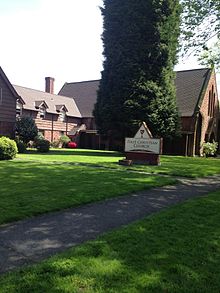
We discussed selling part or all of our church property as a part of our call to revitalize ourselves.
And there were no raised voices, no angry calls for separation, only reasoned consideration, passionate points of view, and a willingness to listen and understand.
When I arrived here almost five years ago, we were averaging only a fistful or two of people on a Sunday, with equally meager tithes and offerings flowing into the church coffers--so meager, in fact, that the search committee that voted to recommend calling me told me that they could potentially only afford me at full-time wages for two years.
And, like I said, it has been almost five years since that conversation.
Which means that, financially, we've actually improved in terms of our solvency and viability.
The problem for us is that it hasn't been enough--through no fault of any of us, really. First Christian was one of the first churches planted in Longview back during the Roaring Twenties, and true to that decade, it was built with the intention of being a church with a bit more moneyed membership.
But then the crash of 1929 happened. And while Longview recovered just fine, and had its economic golden years during the mid-to-late 20th century, the combined hits of NAFTA, CAFTA, the Great Recession, and the exodus of the executives who actually ran the pulp and paper mills that our town was built around all left Longview with much less money than it once had.
This loss of wealth has extended to many of its churches, with some churches merging with other congregations, cutting back on staff, or closing altogether.
I say none of this to air any sort of dirty laundry--quite the contrary, being able to talk about finances is something we Christians simply need to be better at and more comfortable with doing. And churches should be able to talk about how to best utilize their resources, including putting some of those resources on the market, simply as a matter of course in the pursuit of good stewardship and care of what they have been blessed with.
Rather, I say all of that to preface, in point of fact, my very real and genuine pride with the congregation that I serve over how they have taken to the many adjustments that calling a pastor like me has entailed.
For me, what has been toughest is that even though these adjustments have led to very real and very heartening growth--both spiritual and quantitative--in our congregation, the financial growth has not followed; indeed, financially, we are not much different than before.
I understand how that singular reality could be taken as a damning indictment of my ministry here. But I was not called to be, or taught to be, a fundraiser. The implicit promise we have taught our pastors is that if you grow the church, the money will follow.
The problem with that promise, though, is that it is completely invalid if the money has been sucked dry out of your beloved town.
And so we are considering liquidating part of our static real estate assets--namely, our secondary building that houses a preschool (unaffiliated with us) in one half of the building and classrooms and our office space, including my office, in the other half. The office space is the only part of the building we use regularly--I teach two Bible studies in one of the classrooms on Tuesdays, and otherwise, we use our side of the building for storage. We are also deliberating what selling the entire property--in order to re-plant with a new building elsewhere in town--might entail.
Those discussions, while consisting of passion and strong emotions and yes, some disapproval, have never become overly contentious, or out-of-hand, or emotionally wrenching to endure. Our board of directors deliberated over months in their meetings and did so in a genuine sense of Christian discernment and unity. Our larger congregation has shown nothing but the same sense of purpose and kindness in spite of the difficulty of the decision that is before us.
And it wasn't through rocket science or brain surgery that this atmosphere of patient deliberation was fostered: it was borne out of an ironclad commitment by church leaders (myself included) to transparency, a willingness to actively seek questions and inquiries, and a commitment to making everyone feel heard.
Again--nothing in there that doesn't seem like a no-brainer. But I'm always amazed when I hear about a church not practicing those disciplines. I realize maybe I shouldn't be, that the systems in many congregations are unhealthy and have been so for a long time. But I pastor a congregation that has, like almost every other congregation, had conflict at times in their past. It can be dealt with healthily. It can be overcome.
So let this be a word of reassurance to my colleagues in ministry, to other Christians, to other churches: hard decisions, tough decisions, big decisions really can be done in an atmosphere of understanding and dialogue. I know it doesn't always feel that way in a world when comments sections are always filled with vitriol and when the presidential race is being led by a demagogue who openly brags about the size of his junk in presidential debates.
Think of it as a way in which we need not necessarily be of this world, even as we are in it. We need not be of that sort of anger and fury, that manner of madness and indignation. The Way of Jesus represents a Way different than that of the injuries and pains we inflict upon each other. It represents a Way of hope for the future of God's kingdom, of belief in the people trying to build that kingdom now, and above all else, a love that is not subject to surface-level conditions.
My congregation is showing me a way forward right now. I cannot begin to say how proud I am of that great truth.
Longview, Washington
March 9, 2016
Image courtesy of my church's Wikipedia page
Sunday, March 6, 2016
This Week's Sermon: "What Value of Idols"
Habakkuk 2:15-20
Doom to the one who makes his companions drunk, pouring out your wrath in order to see them naked. 16 You have drunk your fill of dishonor rather than glory. So drink and stagger. The cup of the Lord’s strong hand will come around to you; disgrace will engulf you. 17 Because of the violence done to Lebanon, he will overwhelm you; the destruction of animals will terrify you, as will human bloodshed and violence throughout the land, the villages, and all their inhabitants. 18 Of what value is an idol, when its potter carves it, or a cast image that has been shaped? It is a teacher of lies, for the potter trusts the pottery, though it is incapable of speaking. 19 Doom to the one saying to the tree, “Wake up!” or “Get up” to the silent stone. Does it teach? Look, it is overlaid with gold and silver, but there is no breath within it. 20 But the Lord is in his holy temple. Let all the earth be silent before him. (Common English Bible)
“Treading on the Heights:
A Lent Alongside Habakkuk,” Week Four
I
remember very vividly the first time as an adult that I was denied Holy Communion:
the entire congregation came up, row by row, to the altar, and made a circle
around the altar to partake of communion.
I was the only one in the entire sanctuary sitting outside of the
circle, and they proceed to participate in the Lord’s Supper literally with
their backs turned to me. I hadn’t
realized, walking into the church that Sunday, that this was the way they
performed Holy Communion; I had taken for granted that, as a lifelong
Christian, I would be able to.
It
was a mortifying experience for someone who was born and raised in the
Disciples of Christ tradition of open communion. But as I continued in my faith journey, I
realized just how uncommon it actually is for many, many congregations to deny
communion to all but what they determine (through their own criteria) as the
select few. I read about one such
church, Our Savior Lutheran Church in Texas, in Robert D. Putnam and David E.
Campbell’s definitive 2010 tome, American
Grace: How Religion Divides and Unites Us:
Two large black gates and
a white stone gatehouse mark the entrance to the church grounds…Set atop a hill
overlooking the northwest suburbs of Houston…with its meandering walkways,
shaded lawns, and duck-filled pond; OSL’s grounds have the feel of a retreat
center—quiet, protected, and set apart…
One way in which the
parish’s conservatism manifests itself is in its strict interpretation of the
LCMS doctrine of Closed Communion. An
explanation of this practice appears in the parish’s printed program, the
weekly bulletin, and on the pew cards, and is carefully and tactfully explained
to any self-identified visitors, who are given a green welcome ribbon to pin on
as they enter the sanctuary.
“Those who commune
together at this altar…declare their personal allegiance to the doctrinal
position of this Lutheran congregation,” the explanation reads. “Therefore, participation in Communion is
normally limited to members of this congregation or of sister congregations
within the confessional fellowship of the Lutheran Church—Missouri Synod.”
This reading of Closed
Communion is indicative of how seriously the parish takes its beliefs. “If you take Communion in the wrong way,”
explains Assistant Pastor Thomas Glammeyer, “you are asking God’s punishment.”
What
fascinates me is that the act of partaking in Holy Communion is a gesture of
faith in God, but here, you have to “declare (your) personal allegiance to the
doctrinal position” of an individual congregation. So one’s faith in God is substituted out for this
personal allegiance in order to participate in God’s sacrament.
Yet
their pastor says, “If you take Communion in the wrong way you are asking God’s
punishment.”
I
mean, yeah, you probably do, because in all honesty, substituting adherence to
a doctrine in place of genuine faith in God that may exist outside of that
doctrine, there’s a word for that: idolatry.
Because we have placed our doctrine about God above God. And that’s really a timeless problem, but it's one we're still going to try to tackle today, because that is what God is proclaiming to Habakkuk here.
This
is a new (well, newish now) sermon series for the church season of Lent, which
commemorates the 40 days and nights that Jesus spent fasting in the wilderness
and being tempted by Satan, and the season takes us all the way up to Good
Friday, Holy Saturday, and then Easter Sunday.
Traditionally,
Lent is a penitential, even penal season: it is when we are supposed to give
something up, but in more orthodox settings, those fasts are much more
extensive—daylong entire fasts, or fasting from multiple different foods for
the entirety of Lent, not just beer and chocolate.
In
that wrestling with penitence and punishment, then, Habakkuk serves as a vivid
and sympathetic guide. We know very
little about him personally except that he served as a prophet during the
twilight of the kingdom of Judah, after the capable and righteous king Josiah
dies in 609 BCE, it is less than twenty-five years to the catastrophic sacking
of Jerusalem by the Babylonian king Nebuchadnezzar II, and in between those two
events is likely when Habakkuk is prophesying.
Habakkuk,
though, is really more conversing with God—arguing with God, really—rather than
prophesying to us, which is what makes him such a compelling character, at
least, to me. We began by going through
the prophet’s first back-and-forth with God, about the injustice the prophet
sees around him and God’s response that the Babylonians are being roused to
attack Judah. Then we heard the
prophet’s clearly anguished reply to this plan of God’s—he didn’t like it at
all.
Last
week, God replied once more, and it is a reply long enough that we could only cover
most of it last week, and we continue God’s replay—God’s harangue, really—today,
and God does not let up, tearing into Jerusalem for its excesses—drinking its
fill of dishonor while also making one’s companions drunk—and for its idolatry,
but in truth, excess and idolatry often go hand in hand, even when we think
they might not.
Because
honestly, Christianity is full of idolatry, and no, I don’t mean the “was Jesus
born on December 25?” skepticism that you hear around Christmas (and
truthfully, He probably wasn’t). I am
talking about idolatry in the purest sense of the term: the elevation of
human-made things into divine things meant to take the place of God in our
lives and in our faith.
And
our doctrine—and the sheer extent of it—tends to be *the* human-made thing we
do this to. I get that you might say “But
doesn’t doctrine—that is, sound teaching—come from God?” And sure, 1 Timothy does indeed say that
about Scripture, that it is a source of sound teaching, but it isn’t really
doctrine. Doctrine is systematic,
structured, it has an orderliness and concreteness to it.
But
God is hardly concrete. Indeed, I think,
God is probably hardly structured, at least not in any sense that we can
comprehend. Think about what those terms
mean: it means that God is rigid, incapable of movement. It means that like the Holy of Holies of old,
we have managed to keep God in a square box without any room for movement of the
Spirit that might escape its confines.
And
that is simply no way for us as custodians of the Word to treat the Word. But we do.
We take the ways in which we were meant to view God and treat them as
God. It’s painfully ironic: our
reverence for these sacred and holy things may actually be doing more harm than
good, but it is.
Think
about the simple statement that the Bible is inerrant, or infallible. Most of us have heard that said about
Scripture. But nowhere in Scripture does
it say that it—Scripture—is in fact either inerrant or infallible. The closest we get is that same passage out
of 1 Timothy that says many things about Scripture, that it is useful, that it
is inspired, but not that it is inerrant or infallible.
Yet
we have elevated Scripture up in order to separate ourselves from other
believers.
Why? Because it allows us to say that our doctrine
is better, more pure, whatever, and as a result, ultimately, what it means, if
only implicitly, is that we are going to heaven and you are not, and we have a word for the ones who are not, we call them heretics.
Which,
really, is the whole point of idolatry: to use something, anything, other than
the grace of the one true God as a means by which we can be saved. In this case, the grace isn’t enough, you
have to sign up for all sorts of other beliefs and creeds. “By grace alone” we have emphatically not
been; rather, we have been more like the pigs in Animal House: "all Christians are equal, but some are more equal than others."
This
is by no means the only idolatry we are tempted with—just look at just how
over-the-top commercialism has gotten surrounding Christmas—but it is one of
the most constant, because creating distinctions of “us” and “them” is endemic
to religion; it was true in the Hebrew Bible, when Moses commanded the deaths
of entire tribes of people in Deuteronomy, and it is true today.
The
First Commandment, though, of the Ten handed down to Moses atop Mount Sinai, is
“I am the Lord your God, you shall have no other gods before me.”
But
what about our doctrine? No gods before
God.
But
what about the denomination? No gods
before God.
But
what about the Bible? No gods before
God.
You
live for, breathe for, love, and serve God.
Everything and everyone else—me, other pastors, other theologians—is middle
management trying to help you do that first thing. God comes first.
That
is what God is trying to impress upon Habakkuk (you knew I would get around to
mentioning him at some point, right?!). “Of
what value is an idol? It is a teacher
of lies, for the potter trusts the pottery though it is incapable of speaking.”
Of
what value are our idols of doctrine and divisiveness? They are teachers of lies, because it means
we trust not our maker—God—but what we make—the doctrine, even though, like
literal pottery, it is incapable of speaking to us, much less of speaking to us
in the profound way that only God can!
Of
what value are our idols, our potteries that we have crafted for ourselves,
when Jesus says to us that the entirety of the Law and the Prophets hangs only
on whether we have loved God entirely and whether we have loved our neighbors
as ourselves?
Because
if we are unable or unwilling to do that, then our idols will not be able to
save us.
We
may think they will, and it may comfort us to do so. But that is not what God wants from us. It has never been what God wants from
us. What God has always wanted from us
is, quite simply, love, the sort of love that can only come from faith.
May
we find that love in our faith in God, rather than in our idols, so that God may again come first, and let that be enough.
May it be so. Amen.
Rev.
Eric Atcheson
Longview,
Washington
March
6, 2016
Thursday, March 3, 2016
Comfort Zones
Church is a comfort zone for us, even though it probably shouldn't be.
We walk in, saunter over to our usual pew (unless there is someone sitting in it, in which case, we are sadly not above confronting them with the refrain all of us have heard at least once: "You're in my pew"), and say hello to all of our usual people.
We sing the same songs we have sung for years, maybe for decades. We hear a sermon that we truthfully have probably heard dozens of times, just said a little bit differently than before.
Everything is the same. Church culture is a culture of sameness, not of difference-making.
We like it that way. And by "we," I don't just mean Christians.
You thought I did, didn't you? What I described may have been your exact church experience.
No, I mean us pastors as well.
We are taught and programmed a particular way. At seminary, I was taught to be a teacher, a preacher, and a counselor. I was not taught to be an administrator, or a building superintendent, or an exorcist of cranky old office equipment.
But those latter things are what, especially as a solo pastor, occupy a significant amount of my time.
And I struggle to be grateful for that. I really do. I want my vocation to hit all of my strengths, all of my comfort zones: teaching Bible studies, leading worship, proclaiming the Word, hospital visitations, and the like.
Let it be said, at this point, that we ought to be ministering in places that match our strengths. My pastoral care skills are not developed enough to be a hospital chaplain (thanks, Clinical Pastoral Education...) and my organizing skills are nonexistent even on a good day, so nonprofit community work is mostly out. I am a parish pastor through and through.
But my comfort zone as a parish pastor is as a particular sort of parish pastor: one whose primary tool of the trade is words--the Word, in fact (forget Donald Trump, I have the best words!). You want a pastor who loves interpretive dance? I ain't your Huckleberry. A pastor who can lead hymn singing? LOL, I can barely lead my own shower singing.
Pastors--or some part of us--may want to be all things to all people; such is our latent desire for the world to hang on the valuable and profound truths we think we have stumbled haphazardly upon. But we're pastors for a particular people, and hopefully that people is our people.
In other words, hopefully we are ministering to whom we need to be ministering to.
But that does not keep us from inhabiting our own comfort zones. Because sometimes, that comfort zone is who we minister to: our current church membership rather than our future church membership. Our well-to-do citizens rather than the single parent with three kids whose power is being shut off at 5:00 pm. The person we know well and feel safe with rather than the homeless stranger who may be actively high when they come to our door.
Or, in my case, my devoted board of directors, to whom I must report how I have been administrating their--our--congregation. Spare a thought for these saints with the patience of Job for dealing with a pastor whose own workplace habits are seldom orderly or even sensical (I told you, I put that paper you were looking for somehere! It'll turn up, I'm sure!).
By God's grace, I have had to grow out of my comfort zone that had been easily established in seminary. I have had to be more than simply the pastor whose gifts God created and subsequently put to work in ministry, I have had to be the pastor whose gifts God did emphatically not create but still, in spite of those lacks and wants, put to work in ministry.
There is a great deal of goodness in learning my own limitations as a pastor in their first call. A great deal of growing pain as well. But goodness.
Because my church is pushing me outside of my comfort zones.
And that is exactly what my church, and any church, is supposed to do.
Longview, Washington
March 3, 2016
We walk in, saunter over to our usual pew (unless there is someone sitting in it, in which case, we are sadly not above confronting them with the refrain all of us have heard at least once: "You're in my pew"), and say hello to all of our usual people.
We sing the same songs we have sung for years, maybe for decades. We hear a sermon that we truthfully have probably heard dozens of times, just said a little bit differently than before.
Everything is the same. Church culture is a culture of sameness, not of difference-making.
We like it that way. And by "we," I don't just mean Christians.
You thought I did, didn't you? What I described may have been your exact church experience.
No, I mean us pastors as well.
We are taught and programmed a particular way. At seminary, I was taught to be a teacher, a preacher, and a counselor. I was not taught to be an administrator, or a building superintendent, or an exorcist of cranky old office equipment.
But those latter things are what, especially as a solo pastor, occupy a significant amount of my time.
And I struggle to be grateful for that. I really do. I want my vocation to hit all of my strengths, all of my comfort zones: teaching Bible studies, leading worship, proclaiming the Word, hospital visitations, and the like.
Let it be said, at this point, that we ought to be ministering in places that match our strengths. My pastoral care skills are not developed enough to be a hospital chaplain (thanks, Clinical Pastoral Education...) and my organizing skills are nonexistent even on a good day, so nonprofit community work is mostly out. I am a parish pastor through and through.
But my comfort zone as a parish pastor is as a particular sort of parish pastor: one whose primary tool of the trade is words--the Word, in fact (forget Donald Trump, I have the best words!). You want a pastor who loves interpretive dance? I ain't your Huckleberry. A pastor who can lead hymn singing? LOL, I can barely lead my own shower singing.
Pastors--or some part of us--may want to be all things to all people; such is our latent desire for the world to hang on the valuable and profound truths we think we have stumbled haphazardly upon. But we're pastors for a particular people, and hopefully that people is our people.
In other words, hopefully we are ministering to whom we need to be ministering to.
But that does not keep us from inhabiting our own comfort zones. Because sometimes, that comfort zone is who we minister to: our current church membership rather than our future church membership. Our well-to-do citizens rather than the single parent with three kids whose power is being shut off at 5:00 pm. The person we know well and feel safe with rather than the homeless stranger who may be actively high when they come to our door.
Or, in my case, my devoted board of directors, to whom I must report how I have been administrating their--our--congregation. Spare a thought for these saints with the patience of Job for dealing with a pastor whose own workplace habits are seldom orderly or even sensical (I told you, I put that paper you were looking for somehere! It'll turn up, I'm sure!).
By God's grace, I have had to grow out of my comfort zone that had been easily established in seminary. I have had to be more than simply the pastor whose gifts God created and subsequently put to work in ministry, I have had to be the pastor whose gifts God did emphatically not create but still, in spite of those lacks and wants, put to work in ministry.
There is a great deal of goodness in learning my own limitations as a pastor in their first call. A great deal of growing pain as well. But goodness.
Because my church is pushing me outside of my comfort zones.
And that is exactly what my church, and any church, is supposed to do.
Longview, Washington
March 3, 2016
Subscribe to:
Posts (Atom)